Table of Contents
On the map of international trade, Yiwu shines like a brilliant pearl, attracting buyers from over 200 countries and regions worldwide. However, for foreign merchants stepping onto this commercial hotbed for the first time, a fundamental yet crucial question often lingers in their minds: Is the Yiwu market B2B (business-to-business) or B2C (business-to-consumer)? The answer to this question is far more complex than it appears on the surface.
The B2B DNA of Traditional Markets
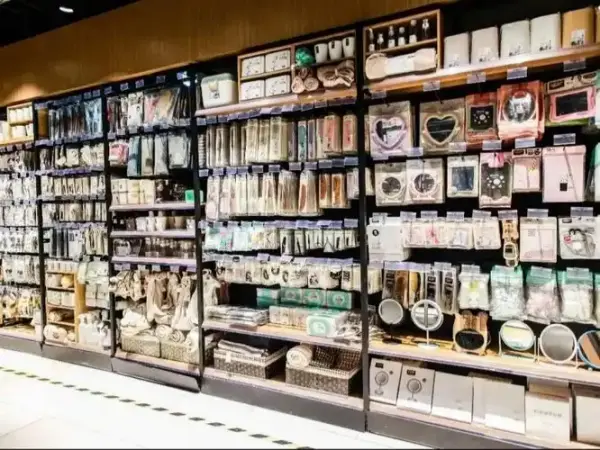
Historically speaking, the birth and development of Yiwu market is deeply rooted in the B2B model. In 1982, the Yiwu county government officially opened the small commodity market, with the original intention of solving the livelihood problem of local farmers’ “chicken feather exchange for candy,” providing a centralized wholesale trading platform for small commodity producers. After more than forty years of development, Yiwu International Trade Mart has become the world’s largest small commodity wholesale market, housing 75,000 shops, with a daily footfall of 210,000 people, and annual transaction volume ranking first among national specialized markets for 31 consecutive years.
In this massive physical market, B2B characteristics are everywhere:
- Minimum Order Quantity (MOQ): The vast majority of products have clear minimum purchase requirements, ranging from dozens to thousands of pieces
- Price tiers: The larger the purchase volume, the lower the unit price—a typical B2B pricing strategy
- Professional terminology: Conversations between shop owners and buyers are filled with professional trade terms like “FOB price,” “EXW terms,” and “inspection standards”
- Transaction methods: B2B-specific settlement methods such as deposits + balance payments, letter of credit payments, and TT transfers dominate
The Quiet Rise of B2C Phenomena
However, simply defining Yiwu as a pure B2B market no longer reflects its full picture. In recent years, with changes in consumption patterns and the penetration of digital technology, B2C elements in the Yiwu market are rapidly growing:
B2C Attempts in Physical Markets: On the first floor and in certain specialized zones of Yiwu International Trade Mart, more and more shops are beginning to accept small batches or even single-item retail sales. Especially during peak tourist seasons, retail business targeting individual customers significantly increases. Some shops have even set up dedicated “B2C zones,” with price tags clearly marked as “retail price” and “wholesale price.”
The Disruptive Impact of Live Streaming E-commerce: The rise of “internet celebrity villages” like Qingyan Liu and Beixiaozhu has completely transformed Yiwu’s commercial ecosystem. Here, streamers sell small commodities worth just a few yuan directly to end consumers worldwide through platforms like Douyin, Kuaishou, and TikTok. In 2023 alone, Qingyan Liu village handled over 500,000 daily express delivery orders, with the vast majority being B2C orders.
The Bridging Role of Cross-border E-commerce: Yiwu’s cross-border e-commerce sellers purchase goods from Yiwu markets and deliver them directly to global consumers through overseas warehouses or direct shipping via platforms like Amazon, eBay, and Shopee. This hybrid model of “B2B procurement + B2C sales” is reshaping Yiwu’s commercial logic.
Hybrid Model: Innovative B2B2C Practices
What truly reveals the essence of the Yiwu market is its unique “B2B2C” hybrid model. This model is not simply a combination of B2B and B2C, but a completely new commercial ecosystem:
Drop Shipping: Many suppliers in Yiwu support drop shipping services, allowing small e-commerce sellers to operate without inventory. Sellers list products on their online stores, and when orders are placed, Yiwu suppliers ship directly to end consumers. This is a typical application of the B2B2C model.
Flexible Supply Chain: Manufacturers and wholesalers in Yiwu are adapting to market demands for small batches, multiple shipments, and rapid response. Some factories can even achieve “7-day delivery” and “minimum order of 100 pieces,” a flexible production system that serves both B-end customers and indirectly supports C-end sales.
Digital Platform Integration: Local e-commerce platforms like “Yiwu Buy” and “Chinagoods,” along with national platforms like Alibaba’s 1688, are seamlessly connecting offline B2B markets with online B2C demand. Buyers can find traditional wholesalers on these platforms while also discovering new merchants specifically serving retail customers.
Practical Guide for Foreign Merchants
For foreign merchants, understanding the dual B2B/B2C nature of the Yiwu market is crucial:
B2B Procurement Strategies:
- Contact suppliers in advance to confirm MOQ and price tiers
- Prepare company qualification documents to secure better wholesale prices
- Consider utilizing the market procurement trade method (Model 1039) to simplify export procedures
B2C Collaboration Opportunities:
- Find suppliers supporting drop shipping to reduce inventory risks
- Partner with stalls experienced in cross-border e-commerce to obtain value-added services like product photography and copywriting
- Leverage Yiwu’s live streaming base resources to conduct cross-border live streaming sales
Hybrid Model Exploration:
- Start with small trial orders to gradually build trust relationships
- Consider establishing a purchasing office in Yiwu or partnering with local agents
- Utilize localized cross-border payment tools like “Yi Payment” to solve settlement challenges
Future Trends: The Continuous Blurring of Boundaries
As the digitalization of global trade accelerates, the boundaries between B2B and B2C in the Yiwu market are continuously blurring. The implementation of the RCEP agreement, the deepening of the Belt and Road Initiative, and the application of new technologies like artificial intelligence and blockchain are all driving Yiwu toward becoming a more intelligent and flexible supply chain hub.
The future Yiwu will no longer be a simple multiple-choice question of “B2B or B2C,” but rather a super commercial platform capable of simultaneously meeting diverse needs including bulk wholesale, small-batch customization, drop shipping, and cross-border retail. This flexibility is precisely why Yiwu can continue to lead global small commodity trade.
Understanding Yiwu market requires recognizing its unique B2B2C hybrid model where traditional B2B wholesale operations coexist with modern B2C retail strategies. As the world’s largest small commodities hub, Yiwu serves international buyers through cross-border e-commerce platforms while maintaining competitive wholesale pricing with minimum order quantities. The market’s flexible manufacturing capabilities support both bulk sourcing for global trade and drop shipping solutions for e-commerce entrepreneurs, making it a comprehensive supply chain management destination for foreign buyers seeking cost-effective retail distribution channels in China’s dynamic manufacturing ecosystem.