Table of Contents
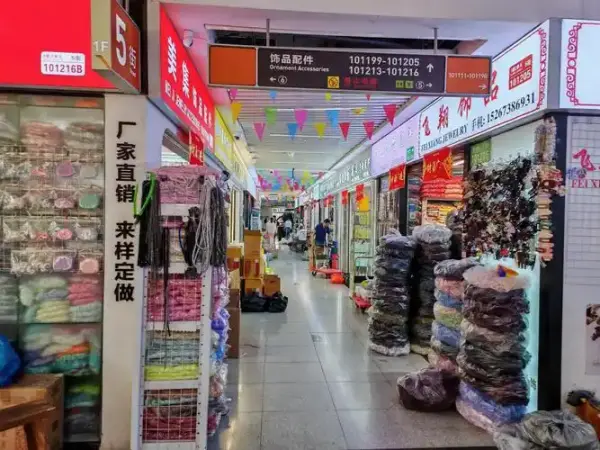
Amid the bustling crowds of Yiwu International Trade Market, buyers from around the globe navigate through 75,000 shops in search of their desired products. However, a question that constantly troubles first-time visitors lingers in their minds: Are the suppliers behind these exhibition booths actually factories? This seemingly simple question conceals the unique commercial ecosystem and complex supply chain structure that defines Yiwu.
The Multiple Identities Behind Exhibition Booths
Walking through Yiwu Market, you’ll find that most booths claim to be “direct from factory,” “source manufacturer,” or “first-hand supplier.” But the truth is often more complex than it appears. Based on field research, Yiwu booth suppliers can be categorized into several types:
Genuine Factory Direct Operations: Approximately 15-20%. These are booths directly established by enterprises that own production facilities, primarily concentrated in Yiwu’s traditional strong product categories such as accessories, socks, zippers, and other specialty items. They typically possess complete production equipment photos, factory video tours, and can provide detailed manufacturing process information.
Factory Sales Outlets: Approximately 30-35%. These booths are invested in and established by factories but don’t engage in actual production themselves. Instead, they focus on market promotion and customer engagement. Their advantage lies in being able to directly reflect factory capacity and pricing, though their customization capabilities may be limited by the actual capabilities of their parent factories.
Professional Trading Companies: Approximately 40-45%. These are specialized traders with years of experience in specific product categories who have established long-term cooperative relationships with multiple factories. They integrate supply chain resources to provide one-stop procurement services. While not factories themselves, they often have advantages over single factories in terms of quality control and order coordination.
Middleman Distributors: Approximately 5-10%. These represent the most traditional intermediaries who profit from the price difference between factories and buyers. As information transparency increases, the proportion of these suppliers is gradually declining year by year.
Why Don’t Factories Set Up Booths Directly?
If it’s more advantageous for factories to deal directly with customers, why aren’t most booths operated directly by factories? The answer lies in profound commercial logic:
Financial Pressure: In Yiwu International Trade Market, the annual rent for a standard booth ranges from 150,000 to 300,000 RMB, plus decoration and labor costs, bringing the annual operating expenses easily above 500,000 RMB. For small and medium-sized factories, this represents a significant fixed expense.
Professional Specialization: Factories excel at production, while market promotion, customer reception, and order management require completely different professional skills. Having specialized trading companies handle the front-end customer interactions while factories focus on back-end production represents a more efficient division of labor.
Risk Diversification: By selling products through multiple trading companies, factories can diversify the risk of having overly concentrated customer bases. Even if a major customer is lost, it won’t be fatal to the factory.
Flexible Response: Trading companies can quickly adjust their product portfolios based on market changes, while factories dealing directly with the market would face greater inventory pressure and market fluctuation risks.
Challenges Faced by Buyers
For international buyers, the ambiguity of supplier identities presents numerous challenges:
Price Transparency Issues: The same product can have price differences of over 30% between suppliers of different identities. Buyers often struggle to determine whether they’re getting the most favorable price.
Quality Control Difficulties: While trading companies can integrate resources, they may lack the quality control capabilities of direct factory management. When problems arise, determining responsibility can lead to disputes.
Customization Capability Differences: Genuine factories typically have stronger advantages in product customization and process improvements, while trading companies may be limited by the technical capabilities of their partner factories.
Supply Chain Stability: Procuring through multiple layers of intermediaries reduces supply chain transparency and stability, increasing the risk of supply disruptions.
Practical Techniques for Identifying Genuine Factories
Faced with this complex supplier ecosystem, how can buyers identify genuine factories? Here are several practical methods:
On-site Inspections: Requesting factory visits is the most direct method. Genuine factories welcome customer visits to their production lines, while trading companies may make excuses or only arrange visits to partner factories.
Examine Production Details: Ask specific questions about manufacturing processes, equipment models, raw material procurement channels, and other technical aspects. Genuine factory personnel can provide detailed answers, while intermediaries often lack in-depth technical knowledge.
Check Qualification Documents: Request to see business licenses, production permits, quality certifications, and other documentation. Genuine factories have complete documentation with business scopes that include manufacturing.
Observe Inventory Models: Factories typically have substantial warehousing capacity and can display semi-finished products and raw material inventories, while trading companies primarily showcase finished product samples.
Analyze Price Structures: Genuine factories offer significant price advantages for large-volume orders, with more reasonable price tiers, while intermediaries may have less scientific price gradients.
The Unique Value of Yiwu’s Model
Despite the identity ambiguity issues, Yiwu’s hybrid “factory + trading company” model actually creates unique commercial value:
Resource Integration Advantages: A single trading company can integrate the production capacity of dozens of factories, providing buyers with one-stop solutions that greatly reduce procurement complexity.
Risk Buffering Mechanism: Trading companies, as intermediate links, bear part of the market risk, providing factories with relatively stable orders while offering buyers quality assurance.
Information Matching Efficiency: Professional trading companies better understand international market demand changes and can quickly match factory capacity with buyer requirements, improving overall supply chain efficiency.
Innovation Incubation Platform: Trading companies receive extensive customer feedback and can promptly relay market demands to factories, driving product innovation and process improvements.
Future Development Trends
With the advancement of digital technology, Yiwu’s supplier ecosystem is undergoing profound changes:
Increased Transparency: Through B2B platforms like Alibaba’s 1688 and Chinagoods, direct connections between factories and buyers are becoming easier, redefining the value of intermediary links.
Service Upgrades: Whether factories or trading companies, both are transitioning toward providing value-added services such as design support, logistics integration, and after-sales support. Pure intermediary margin models are becoming unsustainable.
Professional Specialization: The market is forming a more refined division of labor system, with factories focusing on core manufacturing capabilities and trading companies specializing in market development and customer service, creating a virtuous collaborative relationship.
Digital Empowerment: Through big data, AI, and other technologies, supply chain transparency and efficiency will significantly improve, enabling buyers to gain clearer insights into products’ true origins and cost structures.
Conclusion
Returning to the original question: Are Yiwu exhibition booth suppliers actually factories? The answer is complex—some are, some aren’t, and many exist in hybrid forms between the two. This complexity is precisely what gives Yiwu Market its vitality, as it creates an efficient global supply chain network by flexibly integrating distributed manufacturing capabilities through its unique commercial structure.
For buyers, the key isn’t fixating on supplier identity labels but understanding the underlying commercial logic to find the most suitable partners for their needs. True value doesn’t lie in whether you work directly with factories, but in whether you can obtain stable, high-quality, competitively priced products and services.
Understanding Yiwu market suppliers requires careful distinction between genuine factory direct suppliers and professional trading companies operating within the Yiwu International Trade Market ecosystem. Successful small commodity sourcing depends on supply chain transparency and effective manufacturer identification techniques to navigate China’s complex B2B sourcing landscape. Buyers must develop strategies for factory verification while recognizing the valuable role that reputable trading companies play in supply chain management within China’s unique manufacturing ecosystem. This knowledge empowers international buyers to make informed decisions when selecting wholesale suppliers for their global procurement needs.