Table of Contents
I. Historical Evolution and Global Status
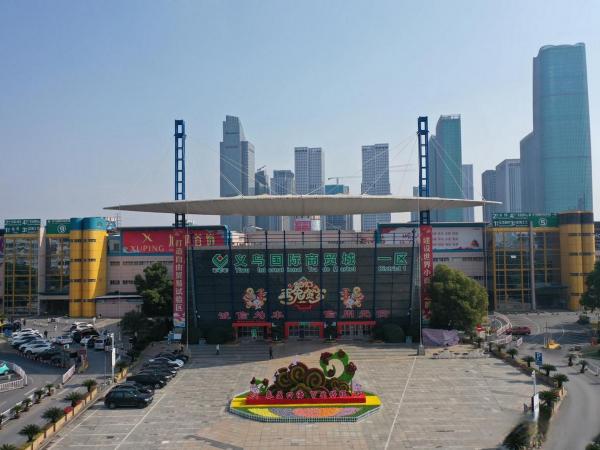
The development journey of Yiwu International Trade City is a microcosm of China’s reform and opening-up and market economy development. Starting from roadside stalls at Huqingmen Market in 1982, Yiwu’s small commodity market has undergone dramatic transformation through six relocations and ten expansions, completing a magnificent leap from the first-generation to the sixth-generation market. Today, this commercial giant located at Chouzhou Road, Futian Street, Yiwu City, Jinhua City, Zhejiang Province, has been recognized by authoritative institutions such as the United Nations, World Bank, and Morgan Stanley as the “world’s largest small commodity wholesale market,” becoming the core hub of global small commodity trade.
As a national AAAA-level shopping tourist attraction, Yiwu International Trade City is not just a commodity trading venue but a modern commercial complex integrating commerce, tourism, and digital services. In 2024, the market achieved a sampled transaction volume of 279.8 billion yuan for the full year, representing a year-on-year growth of 20.02%. The daily average customer flow reached 224,300 visitors, including over 3,900 foreign merchants daily, with trade networks covering more than 230 countries and regions worldwide, fully demonstrating its unparalleled international influence.
II. Scale Layout and Hardware Facilities
1. Spatial Scale
Yiwu International Trade City has a total operating area exceeding 6.4 million square meters, composed of five well-equipped and distinctive zones, with a total of 75,000 merchant stalls gathering over 2.1 million types of commodities from around the globe. This scale not only leads domestically but also stands unrivaled in the international specialized market sector.
2. Hardware Support
The market is equipped with modern infrastructure, including:
- Central air conditioning system: Ensuring comfortable shopping environment year-round
- Internal elevated bridge network: Achieving separation of pedestrians and vehicles to improve traffic efficiency
- Vertical elevator system: Cars can directly access each floor, greatly facilitating bulk purchasing
- Information management system: Providing one-stop services including commodity inquiry, transaction settlement, and logistics tracking
- Foreign merchant service center: Offering professional services such as translation, legal consultation, and business matchmaking for international buyers
III. Market Zoning and Commodity Layout
Yiwu International Trade City adopts a three-dimensional commercial system of “category clustering + direct supply from production areas,” with each zone vertically layered by commodity categories to form a professional and clustered business pattern.
Zone One: Hub for Light Industry Premium Products
- Building area: 340,000 square meters (put into operation in October 2002)
- Main commodities: Toys, artificial flowers, jewelry, craft gifts, household items
- Featured floors: Second floor specializes in headwear and jewelry, fourth floor houses manufacturer direct sales exhibition areas
- Industry status: Core area for global toy and jewelry procurement
Zone Two: Base for Hardware and Electronics
- Building area: Over 600,000 square meters (opened on October 22, 2004)
- Land area: 483 mu, with over 9,000 merchant stalls and more than 10,000 business operators
- Floor distribution:
- First floor: Luggage, umbrellas, raincoats, outdoor leisure products, gift packaging
- Second floor: Hardware tools and accessories, electrical products, locks, vehicles
- Third floor: Hardware kitchen and bathroom items, small household appliances, telecommunications equipment, electronic instruments and meters, clocks and watches
- Fourth floor: Manufacturer direct sales center and premium trading zones such as Hong Kong Pavilion, Korean Pavilion, Sichuan Pavilion
- Fifth floor: Foreign trade procurement service center
Zone Three: Professional Zone for Culture, Sports, and Cosmetics
- Main commodities: Stationery, office supplies, cosmetics, outdoor sports equipment
- Industry characteristics: Gathering global renowned stationery brands and cosmetic suppliers
Zone Four: Distribution Center for Textiles and Daily Necessities
- Building area: 1.08 million square meters, with over 16,000 merchant stalls and more than 20,000 business entities
- Commodity distribution:
- First floor: Socks, leggings
- Second floor: Daily necessities, gloves, hats, other knitted cotton products
- Third floor: Shoes, threads and tapes, lace, ties, yarn, towels
- Fourth floor: Bras and underwear, belts, scarves
- Fifth floor: Manufacturer direct sales center, tourist shopping center
Zone Five: New Heights for Imported Goods
- Main commodities: Bedding, automotive supplies, knitting raw materials, imported goods
- Strategic significance: Building an international procurement platform to meet diversified consumer demands
IV. Industrial Chain Support and Service System
The success of Yiwu International Trade City lies not only in its market scale but also in its complete industrial chain support and professional service system.
1. Logistics Network
- Global coverage: Established trade relations with 233 countries and regions
- Efficient distribution: Daily handling of hundreds of thousands of tons of goods, achieving “morning departure, evening arrival” domestic delivery
- International logistics: Operating China-Europe freight trains and international air routes, building “Belt and Road” trade channels
2. Financial Services
- Foreign exchange settlement: Supporting real-time exchange of over 100 currencies
- Supply chain finance: Providing services such as letters of credit, factoring, and financing for small and medium merchants
- Payment innovation: Promoting mobile payment, cross-border payment, and other new payment methods
3. Digital Transformation
- AI technology empowerment: In 2024, import and export volume reached 668.93 billion yuan, with AI technology deeply integrated into the entire trade process
- E-commerce integration: Online-offline integration, creating a “never-ending expo”
- Big data application: Guiding merchants in precise product selection and marketing through consumer data analysis
V. Cultural Heritage and Social Value
1. Historical Heritage
The development history of Yiwu International Trade City is an epic tale of Chinese private economy development. From the initial “chicken feather exchange for sugar” to today’s “world supermarket,” Yiwu merchants have written a legendary story of market economy development with wisdom and hard work. The market houses the China Small Commodities City Development History Exhibition Hall, documenting this magnificent development journey.
2. Employment Creation
The market directly drives employment for over 210,000 people, with registered market entities exceeding 900,000, accounting for one-eleventh of Zhejiang Province’s total, ranking first among county-level regions in the province. This not only solves massive employment issues but also cultivates generations of entrepreneurial elites.
3. International Exchange
As an important window for China’s opening-up, Yiwu International Trade City attracts hundreds of thousands of foreign merchants annually. Merchants from different countries and cultural backgrounds communicate and cooperate here, not only promoting commodity circulation but also enhancing international friendship, becoming an important platform for people-to-people diplomacy.
VI. Future Outlook
Standing at a new historical starting point, Yiwu International Trade City is advancing towards the goal of becoming the “global center for small commodity trade.” Through digital transformation, international expansion, and green development, the market will continue to enhance service quality and competitiveness. Especially under the “Belt and Road” initiative, Yiwu will better connect China with the world, enabling more “Made in China” products to reach global markets and bringing more “world-class products” to the Chinese market.
Yiwu International Trade City stands as the UN-certified world’s largest small commodity wholesale market and serves as the core hub connecting Made in China products with global procurement needs. The market encompasses comprehensive product categories including hardware tools wholesale, toy jewelry market, daily necessities wholesale, and imported goods center, providing one-stop foreign trade procurement services for international buyers. Under the Belt and Road trade initiative, the market has transformed through its digital trade center, establishing an extensive supply chain services and logistics distribution network spanning over 230 countries and regions. Buyers can access competitive wholesale pricing by connecting directly with factory direct sales resources, utilizing the Yiwu market map and professional procurement guide to efficiently locate required products, experiencing the complete commercial ecosystem from traditional wholesale to modern international trade platform.
Practical Information Guide:
- Address: Chouzhou Road, Futian Street, Yiwu City, Jinhua City, Zhejiang Province
- Business hours: Typically 8:30 AM to 5:30 PM (specific times may vary by season)
- Transportation: After arriving at Yiwu High-Speed Railway Station, take bus or taxi directly to the market; free shuttle buses operate within the market
- Best procurement time: Weekdays have relatively smaller crowds, facilitating in-depth procurement; holidays and exhibition periods offer vibrant market atmosphere
- Notes: It is recommended to plan procurement routes in advance, carry sufficient cash or prepare mobile payment options, and take care of personal belongings
Yiwu International Trade City, a commercial miracle rising from a roadside market, continues to lead the new era of global small commodity trade with its inclusive spirit and continuous innovation. Whether professional buyers or ordinary tourists, everyone can feel the vibrant energy and infinite possibilities of China’s market economy here.